Frequently Asked Questions


WHAT IS AN INVERTER?

An inverter air conditioner signifies the ability of the unit to continuously regulate its thermal power flow. Traditional reverse-cycle air-conditioners use a heat pump that is either working at maximum capability or switched off, as the compressor's speed cannot be varied. Air-conditioners bearing the inverter tag use a variable-frequency drive to control the speed of the motor and thus the compressor. Eliminating stop-start cycles increases efficiency, extends the life of components, and helps eliminate sharp fluctuations in the load the air-conditioner places on the power supply<./p>

Back to Top


HOW DOES REVERSE CYCLE AIR CONDITIONING WORK?

SReverse cycle air conditioning extracts heat from the outside air, even on colder nights, and transfers it inside. A refrigerant is passed through an external coil, absorbing heat from the outside air. This refrigerant is then pumped through a compressor into a fan coil unit (or ‘condenser’) inside the home, releasing its heat into the room.

Back to Top


WHAT IS THE ADVANTAGE OF REVERSE CYCLE AIR CONDITIONERS?

› One of the most economical forms of heating
› Provides both heating and cooling
› The system is cool to touch at all times
› No exposed elements or flames
› Air is filtered
.

Back to Top


WHAT IS THE LIFE EXPECTANCY OF AN AIR CONDITIONER?

Like most appliances, an air conditioner needs to be regularly cleaned and maintained. The filters need to be cleaned and the whole system should be serviced every 18 months or for heavy users every year. Houses that are close to salt air and direct salt from living seaside should have their outdoor system checked regularly. Commercial systems are best maintained on a monthly or bi monthly basis. A maintenance schedule can be arranged with the service department. If regularly maintained an air conditioner can last up to 10 years. However, when the air conditioner starts having any problems that are not cost-effective to fix, it may be time to replace it.

Back to Top


WHAT IS AN RAC?

An RAC is a term frequently used by industry personnel. It refers to a ‘Room Air Conditioner’. These are the types of air conditioners that you commonly find sitting in windows. This type of air conditioner is no longer commonly found in many Brands as the Government has recommended that the split system type air conditioners are more economical, quieter and more energy efficient.

Back to Top


WHAT IS SPLIT SYSTEM?

Split system air conditioners have two pieces which are spilt between the inside of a house and the outside. The Indoor or ‘head’ unit is usually high on the wall in a room inside the house and the outdoor piece is generally directly behind (on the other side of that wall) but on the oustside of the house and on the ground with a hole in the wall connecting the electrical and refrigerant components to each pice. This hole is sealed and the electrical and piping is protected. Split systems tend to be more efficient for a particular size range as their components are generally less constrained by size. Split systems have the advantage of being quieter indoors during operation.

Back to Top


WHAT IS DUCTED AIR CONDITIONING?

Some larger houses may choose ducted or packaged units. These are the type of system that is required when a larger space or larger number of rooms are to be conditioned. The indoor unit is installed in the ceiling cavity of your home. The evaporator coil within the indoor unit conditions the air from the room. The fan inside the indoor unit then circulates the conditioned air back into the room. Each room has an outlet in the ceiling for the air flow. These outlets are connected in the ceiling by flexible duct. There is a a return air grille located seomehwere in the house for return air and is usually in a hallway. A ducted system can be zoned to make it easier to control each room either together or individually. Slim-line ducted units are installed within the ceiling void. Bulkhead ducted units are designed for single room applications where the ceiling space does not allow for a traditional ducted system. They are compact in design and can be installed into the cavity of your ceiling, at floor level or in a wall bulkhead in your room. The outdoor unit is installed on the outside of your home. It is connected to the indoor unit via interconnecting pipe work, which carries the refrigerant. The compressor in the outdoor unit circulates the refrigerant between the indoor and the outdoor units.

Back to Top


HOW DOES THE AIR FLOW IN A DUCTED SYSTEM?

Discreet ceiling vents throughout your home will quietly and efficiently distribute the conditioned air. The return air grille contains a washable filter that filters the air passing through it. This means that not only is your room the perfect temperature, but dust and dirt particles are also filtered out.

Back to Top


HOW DO I CONTROL DUCTED AIR CONDITIONING?

Remote controllers allow you to set your desired temperature, chose energy saving and other modes, and set timers for the air conditioning to start and stop automatically at the times you choose. Wired Remote Controller These wall-mounted controllers give you control, yet are easy to operate. The LCD panel is easy to read, with icon display, and daily or weekly timers. That means you can dial in the comfort you want, so your home is the right temperature every time you return.

Back to Top


I HAVE A DUCTED AIR CONDITIONER AND THE AIR ONLY COMES OUT IN PART OF THE HOUSE?

This is due to your system having zones. Ducted systems can be designed so that only parts of the house (zones) can be air conditioned at a time. Check that the zone switch is turned on for the room that you wish to air condition

Back to Top


WHAT IS A CASSETTE SYSTEM?

Ceiling cassette systems are an ideal option to air condition rooms where there is no available walls to mount a split system or where there is limited ceiling space for a ducted system. These are very discreet, with only the grill showing in the ceiling. These units fit neatly into the ceiling and distribute conditioned air through 2, 3 or 4 sides of the unit. In addition, flaps allow air to be directed in either a pre-set or sweep pattern.

Back to Top


WHAT IS A MULTI SPLIT?

For greater versatility, inverter multi-split system models feature an innovative design that allows multiple indoor units to be connected to a single outdoor unit. The Multi-Split system allows for more than one indoor unit to be operated from a single outdoor unit. This makes it an economic answer in multi-room applications

Back to Top


HOW OFTEN DO I NEED TO CLEAN THE FILTERS?

When the filter light flashes. Depending on the environment or the air purity, in a normal domestic situation once every season is adequate. In a commercial situation or during periods of heavy use, once every month would be suitable.

Back to Top


I'VE CLEANED THE FILTER BUT THE LIGHT WILL NOT GO OFF?

You need to press the reset button. On wall split systems and floor consoles, you will need to remove the grille to find the reset button. With ducted, light commercial and commercial systems, the reset button is on the controller.

Back to Top


CAN I SWITCH MY AIR CONDITIONER OFF AT THE POWERPOINT OR AT THE FUSE BOX?

It is OK to turn the power off, particularly if you are away for long periods. Most units have a low wattage crankcase heater that keeps the compressor warm. If the compressor is cold, damage will occur at start-up. If you turn off your air conditioner, it must be turned on at the power point at fuse box least 12 hrs before use

Back to Top


DURING THE HEATING CYCLE, A MIST IS EXPELLED FROM THE OUTDOOR FANS?

During winter, most air conditioners defrost when the outdoor temperature is below 6°C. This mist is normal; it is only expelling warm water vapour

Back to Top


MY UNIT IS BLOWING COLD AIR BUT IT IS IN HEAT MODE. WHY?

If the desired temperature has been reached in the room space then the indoor unit will slow the fan but continue to circulate a small amount of air so as to measure room air temperature. This air is actually at room temperature but may feel "cooler" because the indoor unit has stopped heating the air until the room temperature falls again.

Back to Top


THE OUTSIDE UNIT DRIPS WATER, IS THIS NORMAL?

OIt is normal for the outside unit to drip water, particularly when operating a window unit or in heating mode. The unit has a drain outlet and coupling supplied should you wish to connect a drainpipe to remove this water to drain at a different location

Back to Top


WHAT IS SOFT/DRY MODE?

Soft/Dry mode is used to de-humidify the room / space. The unit does this by air conditioning for a minimum amount of time, which allows the system to extract moisture from the air without changing dramatically fluctuating the temperature.

Back to Top


IF I PURCHASE TWO OR THREE UNITS OF THE SAME BRAND OR MODEL, CAN I USE JUST ONE REMOTE CONTROLLER FOR ALL OF THEM??

This is not recommended. If one remote is used to start more than one unit, the load on the power supply is too great. Each indoor unit should have a separate remote control. In this situation, each remote must be set-up by the installer to operate its individual indoor unit correctly. Number the remotes to each unit to be sure that the correct remotes are set on the corresponding units.

Back to Top


DOES THE OUTSIDE UNIT SIT DIRECTLY ON THE GROUND?

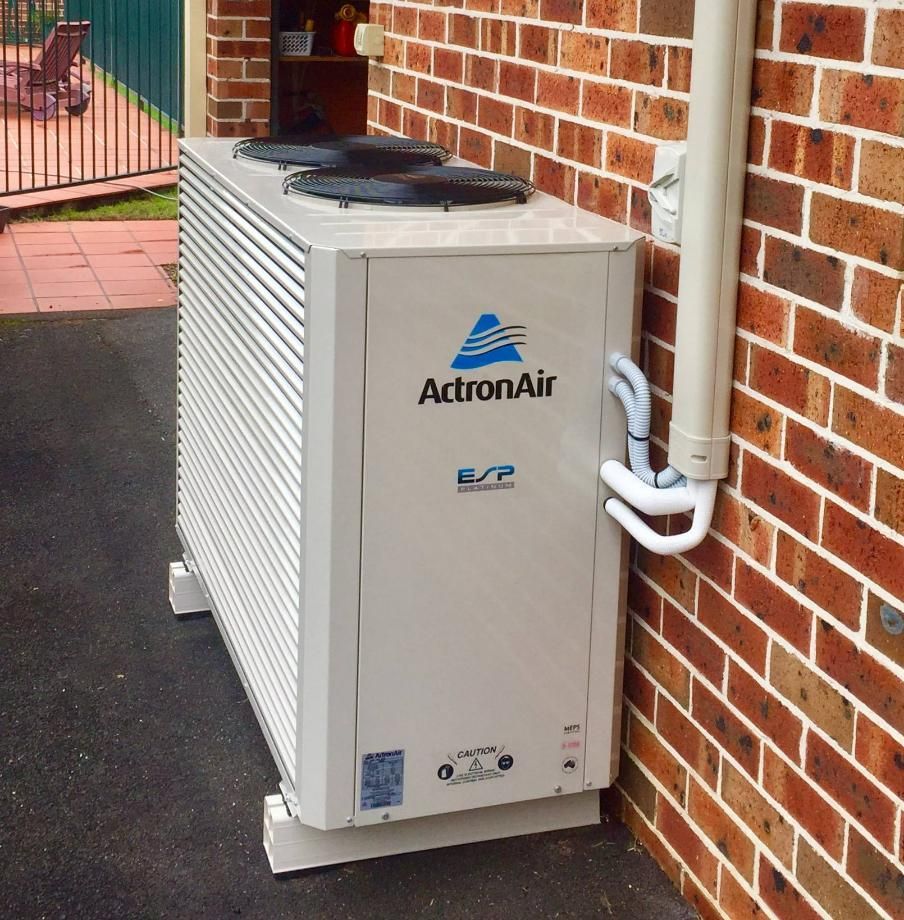
Some form of level concrete slab should be placed under the outdoor unit

Back to Top


WHY DON'T BROCHURES SHOW THE HP RATING?

Air conditioners are now rated using actual heating or cooling capacity measured in a metric unit of kW (kilowatts). This is the most accurate method available when calculating required room capacity.

Back to Top


CAN AIR CONDITIONING MAKE YOU ILL

A well maintained air conditioning system can only contribute to a healthier environment. Because it controls humidity levels the growth of dust mites and molds is reduced. Air conditioning maintains humidity levels of 40 - 60% which is positive for persons with allergies. All units are equipped with a filter. The effecitiveness of a filter goes from catching dust and particles over fine dust and pollen, bacteria, virusses and odours and even microbes and smoke.

Back to Top


HOW CAN I SAVE ENERGY WHEN USING MY AIR CONDITIONER THROUGHOUT THE YEAR?

· During hot weather, turn your air conditioner on early rather than working it harder once your home warms up. Use the timer function
· Adjust the louvres on split system air conditioners so they disperse air downwards when heating and upwards when cooling.
· Clean the air filter regularly.
· Check the energy star labels on your air conditioner - the more stars, the more energy efficient.
· You can optimise the energy-efficiency of your home by insulating the ceiling and walls, and draught-proofing windows and doors.

Back to Top